Physicoll for Tendons, Ligaments and Discs
£39.95
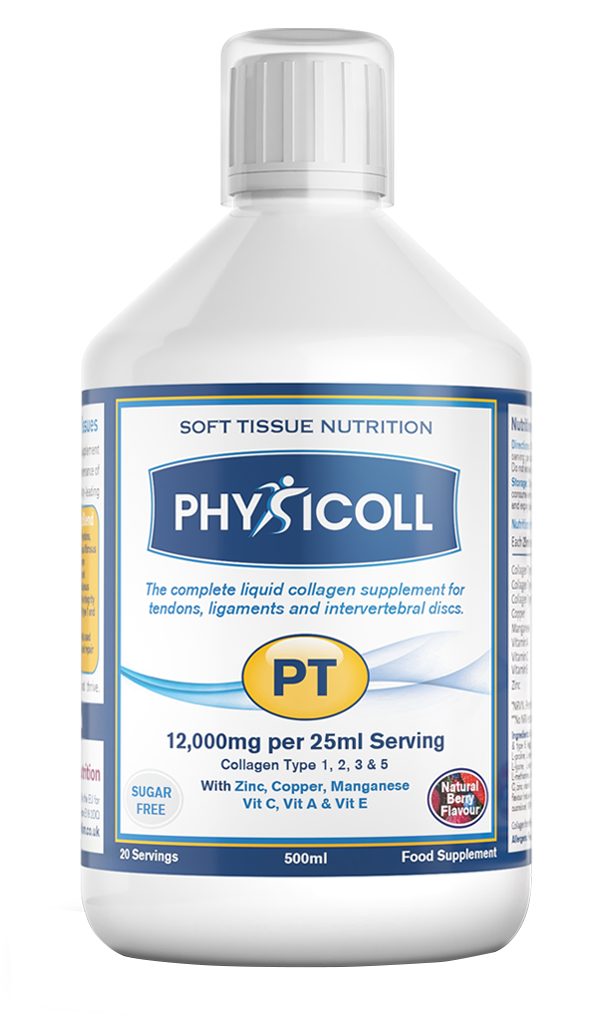
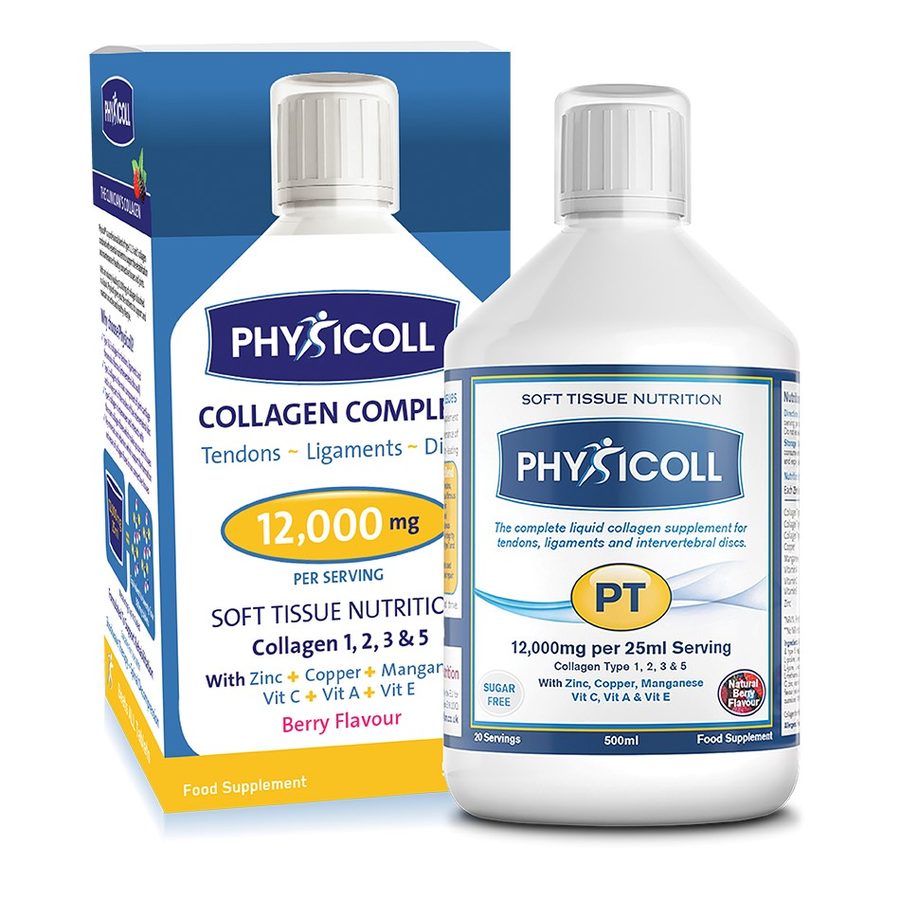
Support your recovery, strengthen your body and stay active with Physicoll — our most collagen-packed supplement for soft tissue health.
Uniquely formulated to help care for tendons, ligaments, and intervertebral discs, Physicoll delivers an impressive 12,000mg of four key types of collagen in every serving, alongside essential nutrients to support tissue repair and formation.
What’s inside every serving:
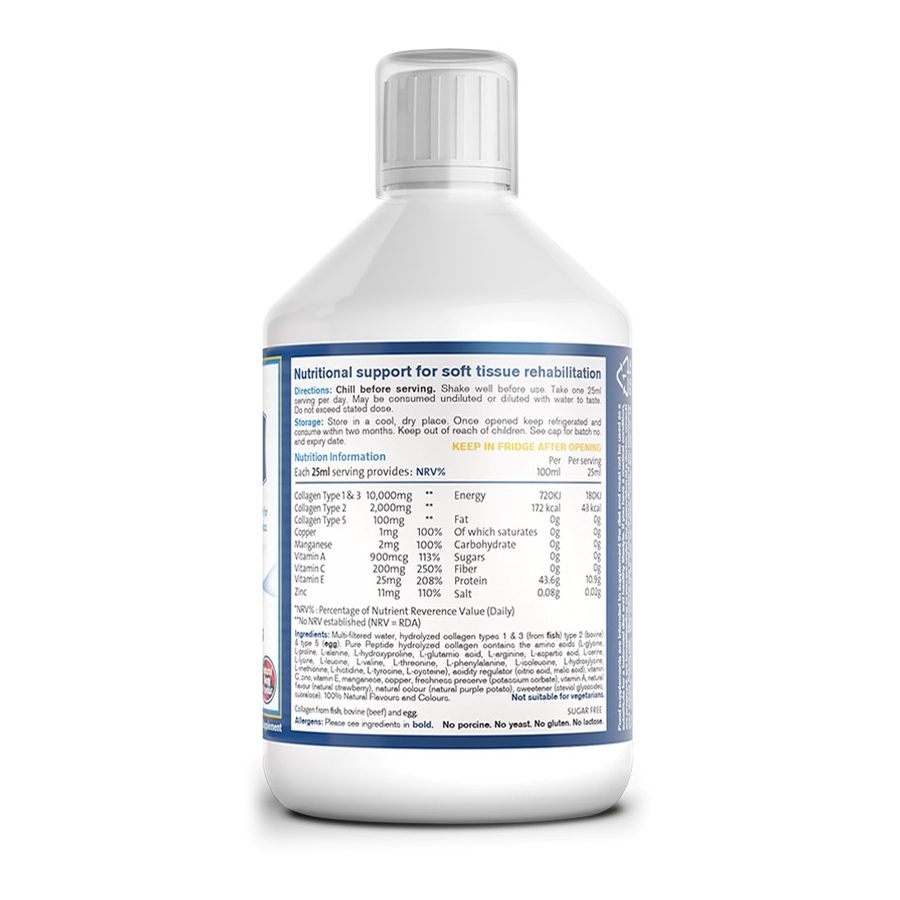
- 12,000mg of Collagen — Types 1, 2, 3 & 5
- Vitamins A, C & E
- Minerals Zinc, Manganese & Copper
- Liquid formula for faster, more efficient absorption
Why choose Physicoll?
- One of the highest collagen doses available
- Specifically designed for people recovering from injury and those who place extra demands on their body
- Developed for and trusted by clinics
Why Choose Physicoll?
Physicoll is the clinician’s collagen supplement for active living, injury recovery and soft tissue support.
Where most collagen products stop at one or two types in modest doses, Physicoll delivers a clinic-grade formula:
- 12,000mg of collagen* per 25ml serving
- Four key types of collagen to target different soft tissues
- A clinically considered blend of vitamins and minerals to support tissue formation, repair and resilience
*Collagen – we use 1,500 Dalton collagen peptides, a low molecular size designed for optimal absorption.
Daltons describe how large a molecule is, smaller peptides are easier for the body to take in and use.
What’s Inside?
Every serving of Physicoll provides:
Type 1 & 3 Collagen (10,000mg) — Essential for tendons, ligaments, fascia and the outer wall of intervertebral discs.
Type 2 Collagen (2,000mg) — The primary collagen in joint cartilage and the central nucleus of spinal discs.
Type 5 Collagen — Interwoven with other collagen fibres, supporting the structure, alignment and stability of soft tissues.
Vitamins A, C and E — To aid collagen production, protect soft tissues, and support overall cell health.
Zinc, Manganese and Copper — Key minerals that help maintain, repair and reinforce connective tissue, assisting collagen cross-linking and enzymatic activity for stronger, more resilient soft tissues.
Supporting Your Soft Tissues, From the Inside Out
Whether you’re an active person placing regular demands on your body, or someone in recovery from injury, Physicoll provides comprehensive nutritional support for the soft tissues that keep you moving:
- Tendons — Made predominantly of Type I collagen for tensile strength, with Type III contributing essential flexibility.
- Ligaments — Dense connective tissues linking bones and stabilising joints, rich in Type I and Type III collagen.
- Intervertebral Discs — Comprising a strong outer wall (Type I collagen) and a gel-like central core (Type II collagen) to absorb spinal load.
Physicoll was created from clinical insight, for those who need more than a beauty collagen product. It contains more collagen per serving than mainstream collagen brands.
Why Clinicians Recommend It
With 12,000mg per serving, Physicoll gives clinicians a higher strength collagen with the necessary supporting nutrients for use alongside rehab and for athletes in training.
By combining four types of collagen and synergistic nutrients in one convenient liquid serving, Physicoll makes soft tissue nutrition simple, effective and reliable.
Directions, Storage & Allergens
Size: 500ml (20 servings)
Directions: Chill before serving. Shake well before use. Take one 25ml serving per day. May be consumed undiluted or diluted with water to taste. Do not exceed stated dose.
Storage: Store in a cool, dry place. Once opened keep refrigerated and consume within two months. Keep out of reach of children.
Allergens: Contains fish and egg. Collagen from fish, bovine (beef) and egg. Not suitable for vegetarians. No porcine. No yeast. No gluten. No lactose.
Ingredients & Research
Physicoll is formulated to support soft tissues with a blend of four types of collagen and supporting nutrients. Below is a description of each ingredient in Physicoll and bibliography with full references to published research studies.
Collagen Types 1 and 3 (I and III)
Collagen is the primary building block of our tendons, ligaments, and skin.
Tendons: Among collagens, types I and III are the most abundant in our tendons. Type I makes up about 80%, while type III makes up about 10% of total collagen in the tendons. (1, 2).
Ligaments: Collagen type I is also a major component of ligaments, accounting for nearly 70% of the dry weight of our ligaments. (3)
Intervertebral Discs: The outer wall of the intervertebral disc, the annulus fibrosus or AF is a collagen fiber matrix which encloses the nucleus. Collagen type I makes about 70% of the dry weight of the annulus fibrosus. (4).
The extracellular matrix (ECM) is a network of several molecules (including proteins) that provide support and structure to our body’s cells and tissues.
Collagen is a critical component of the ECM in our tendons, ligaments, and intervertebral discs. In the ECM, collagen fibres are arranged in bundles.
Also skin, hair and nails: The human skin is 85–90% collagen type I and 10–15% collagen type III. (5) The two primary proteins in nails are keratin and collagen type I. (6) whilst hair is made of type 1 and III collagen.
Collagen Type 2 (II)
Intervertebral Disc (nucleus): The gel-like structure at the centre of the intervertebral disc (IVD) is the nucleus pulposus. NP absorbs and retains water giving the intervertebral disc it’s shock absorbing properties whilst supporting load from our body.
Collagen type II makes up over 85% of total collagen in the nucleus pulposus. (7) Collagen type II helps the IVD retain water. Maintaining a healthy spine and healthy discs requires adequate hydration, movement, strength in supporting muscles. As the IVD degenerates, collagen type II content decreases and collagen type I content increases, resulting in reduced water retention. (8)
Cartilage: Collagen type II is a critical component of our cartilage. Cartilage is a flexible tissue that covers the surface of our joints. Approximately 95% of total collagen in the cartilage is collagen type II. (9)
Collagen Type 5 (V)
Type V collagen is woven into the fabric of collagen fibers. Despite constituting only about 2% of total collagen in tendons and ligaments, collagen type V is critical in determining the size (and strength) of collagen-I fibrils.
The other two major roles of collagen type V are: (10)
- Regulating fibrillogenesis (a process in which the thread-like collagen structures assemble to form a bundle) in tendons and ligaments.
- Promote joint function by strengthening joint-stabilising tendons and ligaments.
Vitamin C
Vitamin C is a water-soluble nutrient with powerful antioxidant activity.
Our body needs vitamin C to make collagen. During tendon and ligament healing, vitamin C promotes healing through its antioxidant activity. (11)
Studies show that vitamin C supplementation helps improve tendinopathy recovery. (12,13)
Zinc
Zinc is an essential nutrient with numerous functions. Our body needs zinc for cell growth, immune function, DNA synthesis, and protein production. It is also a powerful antioxidant.
In addition to being a critical component of bone tissue, zinc also plays a crucial role in helping our body make collagen. (14) Thus, zinc supports ligament and tendon health.
Studies show that zinc supplementation can help prevent damage or improve recovery in ligament and tendon injuries. (15,16)
Copper
Copper is an essential mineral. It is present in all body tissues and is necessary for making red blood cells (RBCs) and keeping our nerve cells and immune system healthy.
Copper is an essential micronutrient for collagen maturation. (17) It enhances cartilage formation and helps repair cartilage injury. (18)
Copper facilitates tendon regeneration, improves collagen fibre stability, and speeds up tendon healing. (19)
Vitamin A
Vitamin A is a fat-soluble micronutrient. It plays a crucial role in vision, reproduction, and immune function.
Vitamin A directly affects extracellular matrix tissue synthesis. (20)
Vit E
Vitamin E is a fat-soluble vitamin with potent antioxidant and anti-inflammatory properties.
Vitamin E supports tendon and ligament health, as evidenced in some studies.
For example, vitamin E (with other nutrients, including vitamin C) supplementation is shown to have beneficial effects in treating chronic tendon disorders. (21)
Likewise, vitamin C and E supplementation following anterior cruciate ligament (ACL) surgery can improve recovery. (22)
Manganese
Manganese is an essential mineral that helps our body function properly. It plays a critical role in digesting cholesterol, carbohydrates, and protein. Moreover, it is involved in growing and maintaining healthy bones.
Manganese also prevents cartilage damage and helps repair damaged cartilage. It is also essential for making type II collagen in the body. (18)
References
- Amirrah, Ibrahim N., Yogeswaran Lokanathan, Izzat Zulkiflee, M. F. Mohd Razip Wee, Antonella Motta, and Mh Busra Fauzi. 2022. “A Comprehensive Review on Collagen Type I Development of Biomaterials for Tissue Engineering: From Biosynthesis to Bioscaffold” Biomedicines 10, no. 9: 2307. https://doi.org/10.3390/biomedicines10092307
- Ribbans, William J., Alison V. September, and Malcolm Collins. 2022. “Tendon and Ligament Genetics: How Do They Contribute to Disease and Injury? A Narrative Review” Life 12, no. 5: 663. https://doi.org/10.3390/life12050663
- Lozano, Pamela F et al. “Water-content related alterations in macro and micro scale tendon biomechanics.” Scientific reports vol. 9,1 7887. 27 May. 2019, doi:10.1038/s41598-019-44306-z
- StatPearls. (2023, August 7). Annular disc tear. https://www.statpearls.com/ArticleLibrary/viewarticle/17615
- Wang, Hsiuying. “A Review of the Effects of Collagen Treatment in Clinical Studies.” Polymers vol. 13,22 3868. 9 Nov. 2021, doi:10.3390/polym13223868
- Saeedi, Pouya et al. “Nail Properties and Bone Health: A Review.” Journal of functional biomaterials vol. 9,2 31. 23 Apr. 2018, doi:10.3390/jfb9020031
- Wei, Yulong et al. “Spatial distribution of type II collagen gene expression in the mouse intervertebral disc.” JOR spine vol. 2,4 e1070. 19 Dec. 2019, doi:10.1002/jsp2.1070
- Liang, Huaizhen et al. “The Proteolysis of ECM in Intervertebral Disc Degeneration.” International journal of molecular sciences vol. 23,3 1715. 2 Feb. 2022, doi:10.3390/ijms23031715
- Nelson, F et al. “Evidence for altered synthesis of type II collagen in patients with osteoarthritis.” The Journal of clinical investigation vol. 102,12 (1998): 2115-25. doi:10.1172/JCI4853
- Connizzo, Brianne K et al. “Regulatory role of collagen V in establishing mechanical properties of tendons and ligaments is tissue dependent.” Journal of orthopaedic research : official publication of the Orthopaedic Research Society vol. 33,6 (2015): 882-8. doi:10.1002/jor.22893
- Noriega-González, David C et al. “Effect of Vitamin C on Tendinopathy Recovery: A Scoping Review.” Nutrients vol. 14,13 2663. 27 Jun. 2022, doi:10.3390/nu14132663
- Dincel, Yasar Mahsut et al. “EFFECTS OF HIGH-DOSE VITAMIN C AND HYALURONIC ACID ON TENDON HEALING.” Acta ortopedica brasileira vol. 26,2 (2018): 82-85. doi:10.1590/1413-785220182602182353
- Noriega-González, David C et al. “Effect of Vitamin C on Tendinopathy Recovery: A Scoping Review.” Nutrients vol. 14,13 2663. 27 Jun. 2022, doi:10.3390/nu14132663
- Molenda, M., Kolmas, J. The Role of Zinc in Bone Tissue Health and Regeneration—a Review. Biol Trace Elem Res 201, 5640–5651 (2023). https://doi.org/10.1007/s12011-023-03631-1
- Edwin, S. (2023). Ligaments Importance for Maintaining Mobility and Prevention from Injury. Longdom. https://doi.org/10.35841/2329-9509.23.11.369
- Hijlkema, Aveline et al. “The impact of nutrition on tendon health and tendinopathy: a systematic review.” Journal of the International Society of Sports Nutrition vol. 19,1 474-504. 3 Aug. 2022, doi:10.1080/15502783.2022.2104130
- Chakraborty, Montosh et al. “Serum Copper as a Marker of Disease Activity in Rheumatoid Arthritis.” Journal of clinical and diagnostic research : JCDR vol. 9,12 (2015): BC09-11. doi:10.7860/JCDR/2015/14851.7001
- Li, Guoyong et al. “The Impact of Trace Elements on Osteoarthritis.” Frontiers in medicine vol. 8 771297. 23 Dec. 2021, doi:10.3389/fmed.2021.771297
- Milewska, Marta et al. “Copper Does Not Induce Tenogenic Differentiation but Promotes Migration and Increases Lysyl Oxidase Activity in Adipose-Derived Mesenchymal Stromal Cells.” Stem cells international vol. 2020 9123281. 20 Feb. 2020, doi:10.1155/2020/9123281
- Tack C, Shorthouse F, Kass L. The Physiological Mechanisms of Effect of Vitamins and Amino Acids on Tendon and Muscle Healing: A Systematic Review. Int J Sport Nutr Exerc Metab. 2018 May 1;28(3):294-311. doi: 10.1123/ijsnem.2017-0267. Epub 2018 Jun 1. PMID: 29140140.
- Mavrogenis, S., Johannessen, E., Jensen, P., & Sindberg, C. (2004). The effect of essential fatty acids and antioxidants combined with physiotherapy treatment in recreational athletes with chronic tendon disorders. Physical Therapy in Sport, 5(4), 194–199. https://doi.org/10.1016/j.ptsp.2004.06.002
- Barker, T., & Traber, M. G. (2011). Does vitamin E and C supplementation improve the recovery from anterior cruciate ligament surgery? Journal of Evidence-Based Complementary & Alternative Medicine, 16(2), 114–128. https://doi.org/10.1177/1533210110392954
Tendon Injury Recovery: Collagen & Shockwave Therapy
“Growing evidence shows that using a collagen supplement with shockwave therapy (SWT) is more beneficial than SWT alone.”
Whether from overuse or trauma, tendon injuries can impact a patient’s everyday activities. In sports, tendon problems can impair performance, have long recovery time and are susceptible to re-injury. Hence a carefully managed rehabilitation programme is essential to ensure the quickest and lasting recovery.
In the past, physiotherapists used rest and ice combined with specific exercises to treat tendon injuries. In the past two decades and especially in recent years, shockwave therapy or extracorporeal shockwave therapy (SWT) has become a mainstay in the rehabilitation of soft tissue injuries, including tendon injuries.
This article looks at how SWT works, its benefits and potential side effects. It also examines tissue fiber proteins in tendons and how combining SWT with collagen supplementation can shorten the recovery period for patients.
A quick overview of tendon injuries
Tendinopathy or tendon injuries are common, accounting for 30 to 50 per cent of all sports injuries. (1) They can happen due to gradual wear and tear associated with ageing, repetitive movements or trauma.
Most cases involve the joints of the shoulder, elbow, knee, and ankle. Examples include:
- Achilles tendinitis
- Patellar tendinitis
- Rotator cuff tendinitis
What is shockwave therapy?
Shockwave therapy uses high-energy sound waves to treat various musculoskeletal conditions, such as: (2)
- Plantar fasciitis (heel pain)
- Shoulder tendinopathy (shoulder pain)
- Elbow tendinopathy (tennis and golfer’s elbow)
- Patellar tendinopathy (jumper’s knee)
- Achilles tendinopathy
- Calcific tendinitis
Though primarily used to treat tendon injuries, shockwave therapy also effectively treats ligament injuries. For instance, in a 2021 case report, the participant with a medial collateral ligament (MCL) injury reported a complete absence of knee pain during the 4 months after starting SWT. (3)
How does SWT work?
Researchers are yet to fully understand how SWT works. However, they believe shock waves can promote tendon repair and improve symptoms by: (4)
- Enhancing multiplication of collagen-producing cells.
- Increasing collagen I and III.
- Upregulating tendon cells (tenocytes).
- Reducing pain perception.
- Decreasing inflammation and soft-tissue calcification.
- Promoting formation of new blood vessels, a crucial step in wound healing.
- Decreasing collagen-degrading enzymes.
A tendon consists of 70% of water and 30% of dry mass, which is composed of 60–80% of type I collagen and 2% of elastin. Amongst others, it also includes type III collagen fibers. The structure of the collagen in tendons is complex and multi-layered. The fibers are primarily made from type I collagen which provides tensile strength whilst type III has several roles including the extensibility of the tendon.
Top 5 benefits of SWT in tendon injuries and beyond
A patient with a (chronic) tendon injury might consider SWT, especially when other therapies have failed. (2) Treatment involves a series of sessions; each session lasts approximately 10 minutes and most experts recommend one weekly session for 3 to 5 weeks.
The benefits of SWT include:
- It is a non-invasive, low-cost treatment with a high success rate. According to a 2012 study, the success rate is between 60 to 80 per cent in Achilles tendinopathy, jumper’s knee, shoulder impingement, and plantar fasciitis. (5)
- SWT is devoid of surgery-associated risks and postoperative pain.
- It is typically safe with minimal side effects, such as mild bruising, swelling, pain, or numbness in the treated area. Some people may experience side effects including headaches or migraines. (6)
- SWT offers an innovative treatment option with a short recovery period.
- It also reduces pain, improves mobility, and reduces stiffness in knee osteoarthritis.
How a collagen supplement can support SWT in tendon injuries
Supporting shockwave treatment with a collagen supplement is a way to provide nutritional building blocks for tendon repair and aid and even accelerate the healing process.
In a 2012 trial, investigators randomly assigned 64 patients with Achilles tendinopathy into two groups, each containing 32 participants. (7)
The experimental group received two daily doses of a nutritional supplement with collagen type I and other nutrients for 60 days with SWT. The control group received SWT with a placebo.
At the 60-day follow up, participants who received SWT with supplement had better outcomes in terms of pain reduction and improved joint function.
A 2019 study revealed similar results. In the study, participants (with shoulder tendinopathy, tennis elbow, and Achilles tendinopathy) who received SWT with a collagen Type I and III supplement had: (8)
- Faster recovery
- Better treatment outcomes
- Reduced use of pain medicines
According to a 2021 study, a 60-day collagen supplementation with SWT resulted in reduced pain and better functional recovery in people with plantar fasciitis (heel pain). This is compared to those who received only SWT. (9)
Moreover, the researchers noted that SWT with supplementation can accelerate the healing of tendinopathies by helping the body form new blood vessels, ultimately leading to better absorption of dietary nutrients.
Supporting tendon injury recovery with Physicoll
In the studies examining collagen supplementation with treatments, the amount of collagen used ranged from 300 mg to 1,000 mg and the collagen was ingested in tablet form.
Physicoll is a high-strength liquid marine collagen supplement which contains an industry-leading 10,000mg (10 grams) of type I and III collagen as well as type II and type V collagen. Type I and III collagen supplements are well established in the aesthetics industry for the formation of collagen, elastin and keratin to support the skin, hair and nails.
However, clinicians are increasingly turning to type I and III collagen in Cutizana to support soft tissue treatments, notably SWT.
There is no clear evidence indicating the optimum amount of collagen needed to support tendon injury recovery. Dry-compressed tablets have a size-limited capacity of not more than 1,000mg per tablet. However, by dissolving nutrients in a liquid, a greater quantity of collagen can be delivered in a single serving with the added benefit of superior bio-availability of nutrients dissolved in a liquid.
Physicoll forms part of a holistic programme of rehabilitation for tendon and ligament injuries.
Summary
Shockwave therapy (SWT) significantly reduces pain, improves functional ability, and enhances quality of life in people with tendon injuries. Moreover, SWT is affordable and has few side effects.
Clinicians can shorten the recovery period for their patients by adding a collagen supplement alongside SWT. Because collagen is an integral part of the tendon and its levels change when a patient has a tendon injury, taking a collagen supplement (type I & III) can aid recovery and reduce pain.
References
- Lipman, Kelsey et al. “Tendinopathy: injury, repair, and current exploration.” Drug design, development and therapy vol. 12 591-603. 20 Mar. 2018, doi:10.2147/DDDT.S154660
- Dedes, Vasileios et al. “Effectiveness and Safety of Shockwave Therapy in Tendinopathies.” Materia socio-medica vol. 30,2 (2018): 131-146. doi:10.5455/msm.2018.30.141-146
- Tognolo, Lucrezia, et al. “Treatment of Medial Collateral Ligament Injuries of the Knee with Focused Extracorporeal Shockwave Therapy: A Case Report.” Applied Sciences, vol. 12, no. 1, Dec. 2021, p. 234. https://doi.org/10.3390/app12010234.
- Tenforde, Adam S et al. “Best practices for extracorporeal shockwave therapy in musculoskeletal medicine: Clinical application and training consideration.” PM & R : the journal of injury, function, and rehabilitation vol. 14,5 (2022): 611-619. doi:10.1002/pmrj.12790
- Notarnicola, Angela, and Biagio Moretti. “The biological effects of extracorporeal shock wave therapy (eswt) on tendon tissue.” Muscles, ligaments and tendons journal vol. 2,1 33-7. 17 Jun. 2012
- Mayo Clinic. Sports medicine practitioners embrace benefits of extracorporeal shock wave therapy. https://www.mayoclinic.org/medical-professionals/physical-medicine-rehabilitation/news/sports-medicine-practitioners-embrace-benefits-of-extracorporeal-shock-wave-therapy/mac-20454275
- Notarnicola, Angela et al. “SWAAT study: extracorporeal shock wave therapy and arginine supplementation and other nutraceuticals for insertional Achilles tendinopathy.” Advances in therapy vol. 29,9 (2012): 799-814. doi:10.1007/s12325-012-0046-4
- Vitali, Matteo et al. “ESWT and nutraceutical supplementation (Tendisulfur Forte) vs ESWT-only in the treatment of lateral epicondylitis, Achilles tendinopathy, and rotator cuff tendinopathy: a comparative study.” Journal of drug assessment vol. 8,1 77-86. 3 May. 2019, doi:10.1080/21556660.2019.1605370
- Notarnicola, Angela, et al. ‘Efficacy of Shock Waves Combined with Adjuvant Therapy with Tendon Supplement in the Treatment of Plantar Fasciitis: A Prospective Randomized Study.’ Journal of Food and Nutrition Research 9.3 (2021): 148-153.