| Joint | Common Ligament Injuries | Typical Cause |
| Knee | ACL, PCL, MCL, LCL sprain or rupture, multi-ligament knee injury | Pivoting, contact sport, landing, skiing |
| Ankle | Lateral ankle sprain (ATFL, CFL), high ankle sprain (syndesmosis), medial deltoid ligament | Rolling the ankle, running on uneven ground, court and field sports |
| Shoulder | Acromioclavicular (AC) joint sprain, glenohumeral ligament injury, shoulder dislocation | Contact sport, fall onto outstretched arm, overhead impact |
| Wrist and thumb | Scapholunate ligament injury, ulnar collateral ligament (skier’s thumb) | Fall onto hand, ball sports, skiing |
| Hip | Hip labral tear, iliofemoral ligament sprain | Cutting movements, repetitive hip flexion, direct impact |
| Elbow | UCL sprain, LCL complex injury | Throwing sports, valgus stress, elbow dislocation |
| Finger | Collateral ligament sprain, volar plate injury | Ball striking, hyperextension, direct contact |
Ligament Injury Grades: What Each Means for Treatment
Ligament injuries are classified by grade, which reflects the proportion of fibres damaged and the degree of joint instability produced. Understanding the grade is essential for determining whether surgery is needed, how long rehabilitation will take, and what restrictions apply in the early phases of treatment.
Grade One: Ligament Sprain
A Grade One sprain involves stretching of the ligament with minor micro-tearing of individual fibres. The joint remains stable. There is localised tenderness and mild swelling but the patient can usually bear weight and maintain functional movement. Recovery with appropriate physiotherapy and load management is typically two to four weeks.
Grade Two: Partial Ligament Tear
A Grade Two injury involves significant tearing of ligament fibres with partial disruption of the ligament structure. There is moderate pain, swelling, and bruising, and the joint may feel unstable or give way under load. Recovery takes six to twelve weeks depending on the joint and the patient’s activity demands. Physiotherapy to restore proprioception, strength, and controlled return to loading is essential to avoid the joint instability that frequently leads to re-injury.
Grade Three: Complete Ligament Rupture
A Grade Three injury is a complete rupture of the ligament. The joint is structurally unstable and the patient is typically unable to weight-bear or function normally through the affected joint. Treatment depends on the joint, the patient’s age, activity level, and functional demands. Some Grade Three injuries, including many MCL ruptures and lateral ankle ligament tears, are managed conservatively with immobilisation followed by structured rehabilitation. Others, including ACL ruptures in active patients, typically require surgical reconstruction followed by a nine to twelve month rehabilitation programme.
A ligament injury that is not properly rehabilitated produces a joint that is weaker, less stable, and less capable of detecting positional changes quickly. This is why re-injury rates for inadequately rehabilitated ankle sprains and ACL injuries are so high. The ligament may heal. The proprioceptive and neuromuscular deficits that predispose to re-injury do not resolve without targeted rehabilitation.
Ligament Injury Physiotherapy in Blackburn: What Treatment Involves at Premier Clinic
Initial Assessment and Diagnosis
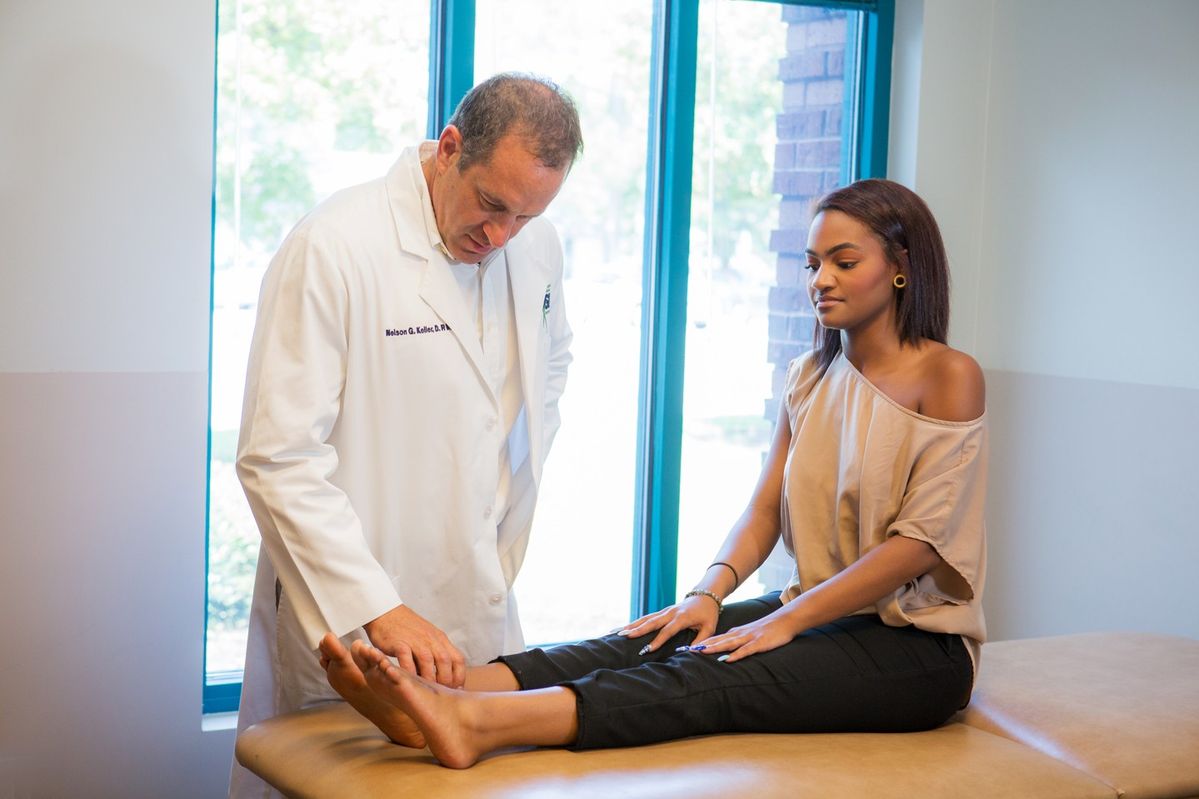
Every ligament injury patient at Premier Clinic begins with a structured clinical assessment. The physiotherapy assessment covers the mechanism of injury, the patient’s functional status, orthopaedic testing to confirm the specific ligament involved and assess joint stability, and where imaging is indicated to confirm the injury grade, the on-site private GP can arrange ultrasound or MRI through the private imaging pathway on the same visit. A clinical diagnosis is established before any treatment is applied.
Phase One: Protection and Acute Management (Days One to Seven)
The immediate priority following ligament injury is protecting the damaged structure while managing pain and swelling, maintaining circulation, and preventing unnecessary stiffness in adjacent joints. Depending on the injury grade and joint, this may involve a period of protected weight-bearing, bracing, or restricted range of motion.
Premier Clinic’s physiotherapy team advises on appropriate protection, prescribes early gentle range-of-motion exercises within permitted limits, and begins gentle activation of the muscle groups most important for joint protection. For lower limb ligament injuries where weight-bearing is restricted, the AlterG Anti-Gravity Treadmill allows protected mobility from the earliest stage of recovery. Soft tissue massage around the injury, avoiding the acute injury site initially, reduces secondary muscular tension and improves local circulation.
Phase Two: Restoring Mobility and Early Strength (Weeks Two to Six)
As swelling settles and the ligament enters the early repair phase, the rehabilitation programme introduces progressive range-of-motion exercises, closed-chain strengthening, and the beginning of proprioception retraining. Proprioception, the joint’s ability to sense its own position and respond to perturbation, is directly disrupted by ligament injury because the mechanoreceptors within the ligament are damaged alongside the collagen fibres. Restoring proprioception is not optional. It is the single most important factor in preventing re-injury.
Phase Three: Strength, Function, and Sport-Specific Conditioning (Weeks Six to Twelve or Beyond)
The later phases of ligament rehabilitation focus on progressive strength training, advanced proprioception and balance challenges, and the introduction of sport-specific movement patterns. For athletes, this phase includes plyometric training, agility drills, and return-to-sport functional testing. For patients returning to physically demanding occupations, it includes functional capacity assessment aligned to the specific task demands.
Where biomechanical factors contributed to the original ligament injury, Premier Clinic’s biomechanics and orthotics service addresses these during the rehabilitation programme to reduce re-injury risk. An ankle that keeps spraining because of foot supination and lateral loading bias needs custom orthotic support alongside the proprioceptive rehabilitation programme to address the mechanical environment that keeps creating instability.
ACL Ligament Injury Rehabilitation in Blackburn
ACL reconstruction rehabilitation is the most extensively studied and the most clinically demanding ligament rehabilitation pathway. The evidence base is clear and Premier Clinic’s programme reflects it.
Before Surgery: Pre-Habilitation
Patients awaiting ACL reconstruction benefit significantly from pre-operative physiotherapy. A patient who arrives at surgery with better quadriceps and hamstring strength, better range of motion, and lower swelling recovers faster and with fewer complications. Premier Clinic provides pre-habilitation programmes for patients on surgical waiting lists, accessible without a GP referral and available within the week.
Post-Surgical ACL Rehabilitation at Premier Clinic
Premier Clinic’s ACL rehabilitation programme follows a staged return-to-sport model grounded in current clinical evidence. Key components include:
- Quadriceps activation from day one post-operatively, progressing through the neuromuscular re-education sequence appropriate to graft healing
- Progressive range-of-motion restoration with attention to achieving full extension early to prevent flexion contracture
- AlterG treadmill running at progressively increasing body weight percentages from the early rehabilitation phase, maintaining cardiovascular fitness and neuromuscular running patterns before full-load treadmill running is safe
- Hamstring-to-quadriceps strength ratio testing to confirm neuromuscular balance before return-to-running clearance
- Limb symmetry index testing targeting above 90% before return-to-sport clearance
- Plyometric and agility progression in the later stages
- Psychological readiness assessment, because fear of re-injury is a documented barrier to full return to sport that clinical discharge criteria alone do not capture
Returning to contact sport before nine to twelve months post-ACL reconstruction, and before objective strength and functional movement criteria are met, significantly increases the risk of re-rupture. Premier Clinic’s ACL programme uses objective discharge criteria rather than time-based clearance. The goal is not the fastest return but the safest and most complete one.
Ankle Ligament Injury Treatment in Blackburn
Ankle sprains are the most common acute sports injury and among the most poorly rehabilitated. Research consistently shows that a significant proportion of patients who sustain a lateral ankle sprain develop chronic ankle instability because the proprioceptive and neuromuscular deficits that result from ligament damage are never properly addressed.
At Premier Clinic, ankle ligament rehabilitation covers the full spectrum from a first acute Grade One sprain to chronic instability in a patient who has sustained multiple sprains over years:
- Acute management including swelling control, protected weight-bearing guidance, and early gentle mobilisation
- Peroneal muscle strengthening, which is the primary dynamic stabiliser of the lateral ankle and the most commonly weakened structure following lateral ankle sprain
- Progressive proprioception training on stable, unstable, and reactive surfaces
- Functional movement retraining for sport-specific ankle demands
- Biomechanics assessment where supination tendency or foot loading patterns contribute to recurrent sprain risk
- Custom orthotic lateral wedging where indicated to reduce inversion loading during sport
Knee Ligament Injuries Beyond ACL: MCL, PCL, and Multi-Ligament
MCL Injury
Medial collateral ligament injuries are among the most common knee ligament injuries in contact sport and typically managed conservatively even at Grade Three severity. The MCL heals well with appropriate protection and physiotherapy because of its strong blood supply. Premier Clinic’s MCL rehabilitation begins with protected weight-bearing, progresses through range-of-motion restoration and quadriceps activation, and advances to functional strengthening and return to sport over four to ten weeks depending on grade.
PCL Injury
Posterior cruciate ligament injuries are less common and often missed initially because they produce less dramatic instability than ACL injuries. PCL rehabilitation focuses on quadriceps strengthening, which compensates for the posterior sag instability of PCL deficiency, alongside progressive functional rehabilitation. Many isolated PCL injuries are managed conservatively with excellent outcomes through structured physiotherapy.
Multi-Ligament Knee Injury
Multi-ligament knee injuries, which typically involve ACL and PCL or ACL and posterolateral corner disruption, are complex injuries requiring surgical management followed by prolonged structured rehabilitation. The rehabilitation programme at Premier Clinic is co-ordinated closely with the operating surgeon’s protocol and uses the AlterG treadmill extensively in the early and middle phases to maintain conditioning during the extended period when full-load exercise is restricted.
Why Choose Premier Clinic for Ligament Injury Treatment in Blackburn?
HCPC-Registered Physiotherapists
Ligament injury assessment and rehabilitation at Premier Clinic is delivered by HCPC-registered physiotherapists who hold a minimum BSc-level qualification and bring extensive clinical experience across musculoskeletal and sports injury presentations. All registration is publicly verifiable. Greta, the clinic’s lead physiotherapist, is also a member of the Chartered Society of Physiotherapy.
AlterG Treadmill for Early Rehabilitation
Premier Clinic is one of the only rehabilitation clinics in Lancashire with an AlterG on site. For patients with lower limb ligament injuries who cannot safely weight-bear fully, the AlterG provides controlled early rehabilitation that simply is not possible on a standard treadmill. This is particularly valuable for ACL reconstruction, ankle ligament reconstruction, and Grade Three ankle sprains where weight-bearing is restricted for several weeks post-injury or post-operatively.
Integrated Sports Injury Team
Ligament injury treatment at Premier Clinic draws on the full clinical team where needed. Sports massage addresses secondary soft tissue restrictions around the injured joint. Biomechanics assessment identifies mechanical factors contributing to injury risk. The running clinic confirms readiness to resume running with objective gait analysis before return to full training load. All services are on the same site with one shared clinical record.
Same-Week Appointments, No GP Referral
A ligament injury that is assessed and treated within the first two to five days typically recovers faster and with fewer complications than one where the patient waits two to three weeks to be seen. Premier Clinic’s self-referral model and same-week appointment availability mean the critical early assessment and treatment window is not lost while waiting for a GP letter or an NHS outpatient slot. Appointments are available Monday to Friday and on Saturday mornings from 9am to 1pm. The clinic is at 11 Cunningham Court, Lions Drive, Shadsworth Business Park, Blackburn BB1 2QS with free on-site parking.
Frequently Asked Questions: Ligament Injury Treatment Blackburn
Q: Who treats ligament injuries in Blackburn?
A: Premier Clinic at Lions Drive, Shadsworth Business Park, Blackburn BB1 2QS provides specialist ligament injury treatment delivered by HCPC-registered physiotherapists. The clinic treats ligament injuries across all joints including knee (ACL, PCL, MCL), ankle, shoulder, wrist, and hip. No GP referral is needed. Call 01254 677341 or email info@premier-clinic.co.uk to book.
Q: Do I need a GP referral for ligament injury physiotherapy in Blackburn?
A: No. Premier Clinic operates a self-referral model for all physiotherapy and sports injury services. You can book directly by calling 01254 677341 or emailing info@premier-clinic.co.uk. If you have imaging, a hospital letter, or a surgical discharge summary relevant to your injury, bringing these to the first appointment helps the team design the most appropriate programme.
Q: How long does ligament injury rehabilitation take in Blackburn?
A: Recovery duration depends on the specific ligament, the grade of injury, and the patient’s activity demands. Grade One sprains typically resolve within two to four weeks with appropriate physiotherapy. Grade Two injuries take six to twelve weeks. Grade Three injuries managed conservatively take three to six months. ACL reconstruction rehabilitation requires nine to twelve months before return to contact sport. Premier Clinic provides a realistic recovery timeline at the initial assessment and reviews it as rehabilitation progresses.
Q: Can Premier Clinic treat ACL injuries in Blackburn?
A: Yes. Premier Clinic provides both pre-surgical physiotherapy for patients awaiting ACL reconstruction and comprehensive post-surgical ACL rehabilitation programmes using staged progression criteria, AlterG treadmill training, limb symmetry testing, and objective return-to-sport discharge criteria. The clinic treats patients before and after ACL reconstruction surgery carried out at NHS or private hospitals across Lancashire.
Q: What sports injury treatment is available in Blackburn at Premier Clinic?
A: Premier Clinic offers a full range of sports injury treatment including ligament injury assessment and rehabilitation, physiotherapy, sports massage, biomechanics assessment and custom orthotics, shockwave therapy for chronic soft tissue conditions, AlterG treadmill rehabilitation, running clinic gait analysis, and return-to-sport testing with objective functional criteria. No GP referral is needed for any service.
Book Your Ligament Injury Assessment at Premier Clinic Blackburn
A ligament injury assessed and treated quickly, by a clinician who correctly identifies the grade and designs the rehabilitation programme accordingly, produces a fundamentally different outcome to one where the patient rests for three weeks and then tries to return to sport without addressing the proprioceptive and strength deficits that make re-injury likely.
Premier Clinic at Lions Drive, Blackburn provides ligament injury treatment from day one through to return to full activity. HCPC-registered physiotherapists. AlterG treadmill for early rehabilitation. Sports massage. Biomechanics assessment. No GP referral required. Same-week appointments.
Call 01254 677341 or email info@premier-clinic.co.uk to book your ligament injury assessment.
Premier Clinic is at 11 Cunningham Court, Lions Drive, Shadsworth Business Park, Blackburn BB1 2QS. Open Monday to Friday 9am to 6pm and Saturday 9am to 1pm. Free parking on site.